Mephitis AdvocateSkunk News You Can Use!

  • 
  • 
    • 
    • Pet Skunk Blog
    • Headlines
    • Blog Rules
    • Message Board
    • In Memoriam
    • About Us
    • Contact Us
    • Resources
      • Blood Chemistry Values
      • Supplement and Drug list
      • Glossary of Terms
      • Archives
      • Recipes
      • Links
    • Veterinarians
    • Skunk Show 2016
    • Care Booklet Kits 2016
    • Register
    • Login
    • Members
      • Recover Password
  • Good Old Fashioned Hand Written Website by Eric J. Schwarz

Mephitis Advocate

Skunk News You Can Use!

    • Pet Skunk Blog
    • Headlines
    • Blog Rules
    • Message Board
    • In Memoriam
    • About Us
    • Contact Us
    • Resources
      • Blood Chemistry Values
      • Supplement and Drug list
      • Glossary of Terms
      • Archives
      • Recipes
      • Links
    • Veterinarians
    • Skunk Show 2016
    • Care Booklet Kits 2016
    • Register
    • Login
    • Members
      • Recover Password
Apr 30th
2016
Pet Skunk Portion Sizes
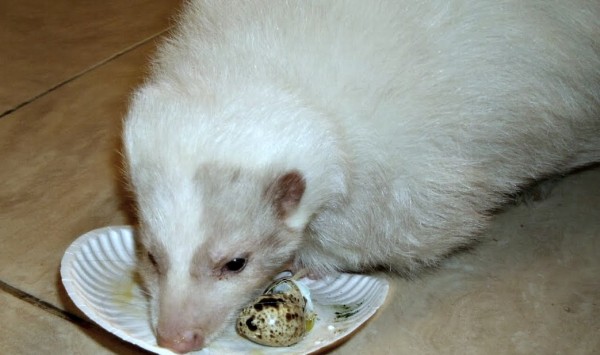
species appropriate foods for pet skunks

Obesity is still the number one challenge mentioned in speaking with Veterinarians who see pet skunks. So today I would like to take a few minutes to discuss portion sizes for some of the most common foods fed to pet skunks. An obese skunk will not live a long, healthy life and will likely suffer from one or more painful health conditions. Read more about obesity in pet skunks here. As mentioned previously, skunks in the wild need small portions of nutrient dense foods. Pet skunks need the same, from foods that are nutritionally similar to what their wild cousins would be getting. I often get calls from concerned owners who know their skunk is too heavy, but don’t understand why. Skunks in the wild do not have access to processed foods or very many simple carbohydrates other than wild berries, limited fruit and their favorite, wild honey. Their diet is primarily insects and insect larvae supplemented with eggs from ground laying birds and left overs from larger predators. Skunks have been kept as pets for a while, but there has not been enough time pass for evolutionary changes in diet from their ancestral diet. This means they have not evolved into an animal that can burn carbohydrates as fuel like humans do. When skunks are fed a diet high in carbohydrates, their body stores the carbs as fat. We know this is true for several reasons. One, a wild skunk’s diet is at least 85% insects and larvae. In […]

Search

Archives

  • July 2016
  • June 2016
  • May 2016
  • April 2016
  • March 2016
  • February 2016
  • January 2016
  • December 2015
  • November 2015
  • October 2015
  • September 2015
  • August 2015
  • July 2015
  • June 2015

Login or Register

Register | Lost your password?

Recent Posts

  • Skunk Kit Death
  • Inflammation in Pet Skunks
  • Pet Skunk Information
  • Baby Season 2016-Choosing a Veterinarian
  • Baby Season 2016
  • Oregon March 18, 2026 Meeting
  • Pet Skunk Portion Sizes
  • Nebulizing Your Pet Skunk
  • Annual Skunkie Easter Egg Hunt
  • Tennessee Skunk Ownership
  • Oregon Skunk Ownership
  • Pet Skunk Message Board
  • Junior Skunks
  • Spotlight on Hershey
  • The 27TH Annual Skunk Show Winners
  • Introducing Another Skunk
  • Obesity in Pet Skunks
  • Is Your Skunk Ready to Show?
  • 4 Month Old Skunk Kits
  • Spotlight on Cleopatra
  • Raw Hemp Cookies
  • Spotlight on Gidget
  • Vetting your Veterinarian

Categories

  • Adult Skunks
  • Diet
  • Feature Skunk Stories
  • General
  • Recipes
  • Skunk Health Care
  • Skunk Kits
  • Skunk Shows
  • Skunk Tips and Tricks

Recent Comments

  • Linda Bean on Skunk Kit Death
  • Lynnda Butler on Skunk Kit Death
  • Lynnda Butler on Baby Season 2016
  • Eva Clark on Baby Season 2016
  • Maria on Baby Season 2016