Pet Skunk Portion Sizes
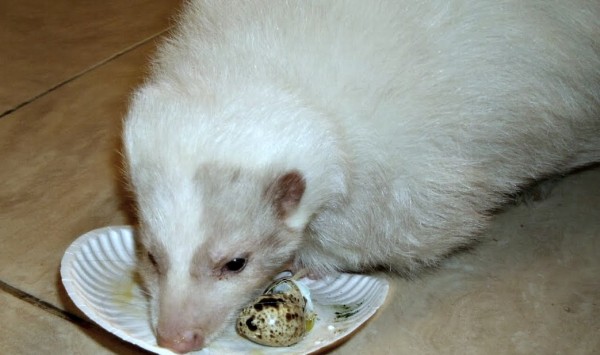
Obesity is still the number one challenge mentioned in speaking with Veterinarians who see pet skunks. So today I would like to take a few minutes to discuss portion sizes for some of the most common foods fed to pet skunks. An obese skunk will not live a long, healthy life and will likely suffer from one or more painful health conditions. Read more about obesity in pet skunks here. As mentioned previously, skunks in the wild need small portions of nutrient dense foods. Pet skunks need the same, from foods that are nutritionally similar to what their wild cousins would be getting. I often get calls from concerned owners who know their skunk is too heavy, but don’t understand why. Skunks in the wild do not have access to processed foods or very many simple carbohydrates other than wild berries, limited fruit and their favorite, wild honey. Their diet is primarily insects and insect larvae supplemented with eggs from ground laying birds and left overs from larger predators. Skunks have been kept as pets for a while, but there has not been enough time pass for evolutionary changes in diet from their ancestral diet. This means they have not evolved into an animal that can burn carbohydrates as fuel like humans do. When skunks are fed a diet high in carbohydrates, their body stores the carbs as fat. We know this is true for several reasons. One, a wild skunk’s diet is at least 85% insects and larvae. In […]
Nebulizing Your Pet Skunk
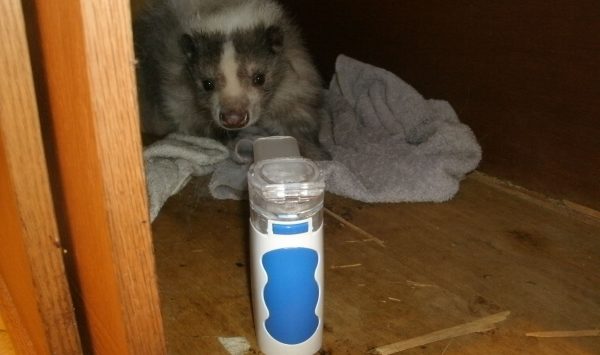
Skunk owners need to be aware that it is possible to pass on upper respiratory illnesses like a cold or the flu to their pet skunk. The ability of a human to pass along an illness to their pet is called “reverse zoonosis,” Surprisingly, this happens more often than you might think. Depending on the age and health of the skunk, this can range from serious to fatal so you need to promptly take the skunk to a Veterinarian if you think this has happened. Signs of upper respiratory infections in pet skunks are pretty similar to what humans experience: sniffling, sneezing, coughing, and crusty eyes. Often the skunk will stop eating because taste is affected when they cannot smell properly. Your Veterinarian can swab the secretions and identify bacteria, if present. Generally, they may start the skunk on a broad spectrum antibiotic like Clavamox, but may need to change to a different antibiotic, depending on the results when the lab report for the swab comes back. The sooner you get the skunk to the Veterinarian, the better off he or she will be. Infections can take a heavy toll on the senior skunk and you do not want a simple illness to turn into pneumonia! If it is determined that the illness is viral, other drugs may be prescribed including an antibiotic in the case of a secondary bacterial infection. Oral antibiotics may be helpful but inhaled antibiotics often work faster and costs surprisingly little. Even if the Veterinarian […]