Introducing Another Skunk
So you are a skunk owner and are wondering if it is time to add another skunk to your family? This may not be as simple as it sounds. In the wild, skunks are solitary creatures. They interact during mating seasons and in northern states, adults will den together for warmth. Some skunk owners mistakenly believe their skunk requires the company of another skunk only to find their beloved pet reacts with hostility or violence to the newcomer. 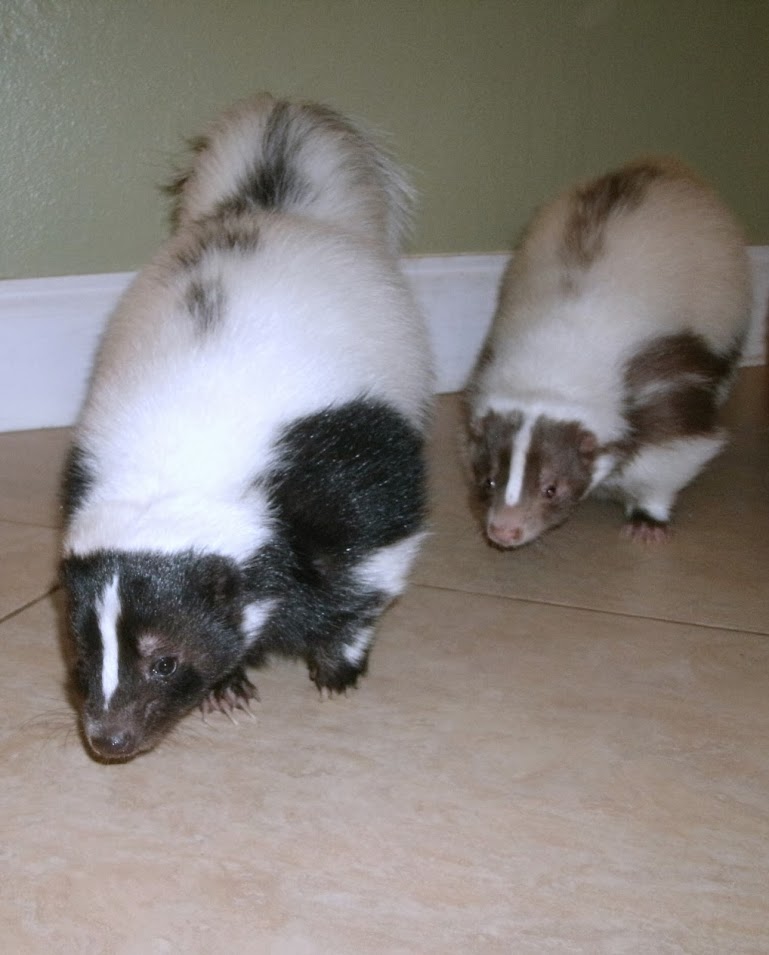
Some things to consider if you are thinking of adding another skunk:
1) you have the time to properly introduce the new skunk to the household.
2) you can afford the additional medical care. If you have one skunk and struggle with the cost of Veterinary care, you will be doubling that cost by adding another skunk.
3) you can afford to properly feed the newcomer.
4) you have the space in your home to safely house both skunks. If the skunks do not get along, are you willing and able to keep them apart for their safety for as long as it takes? In some cases, this means permanently. In my house, the main exercise we get is by going over the baby gates that section off rooms.
5) you understand skunks are captive wildlife that are controlled by instinct. If you know you humanize your pets, you may be putting them in danger by bringing in another skunk. Human logic is basically strongly held opinions that makes sense mostly to the one holding the opinions. Instinctive behavior rules the skunk, they have no understanding of human logic. It cannot be trained out though time seems to blunt it in many cases.
If you are getting another skunk, you need to know how to properly introduce the new family member. There is always a hierarchy from an animal’s prospective. 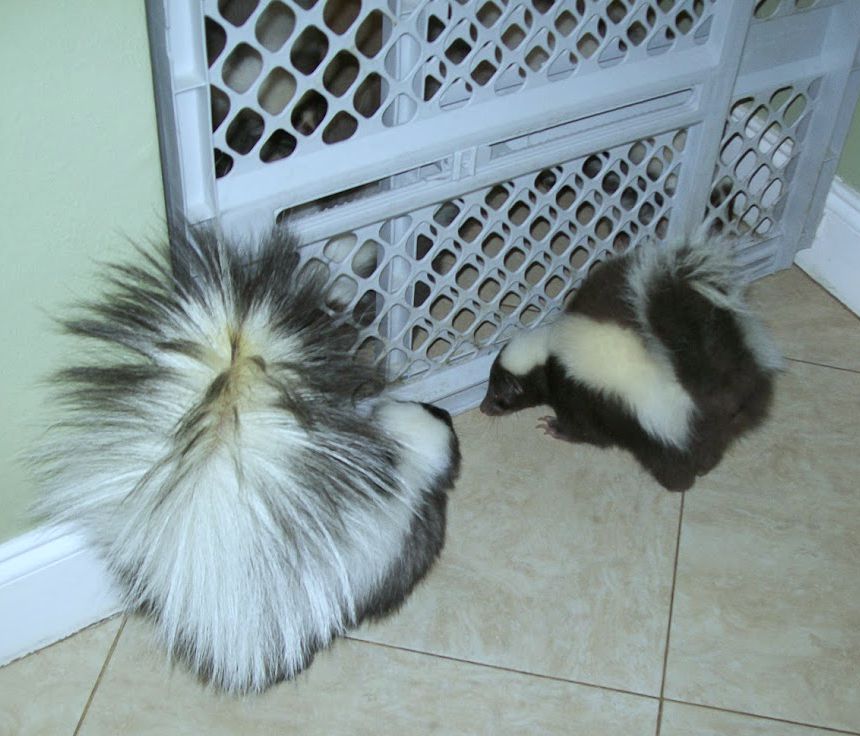
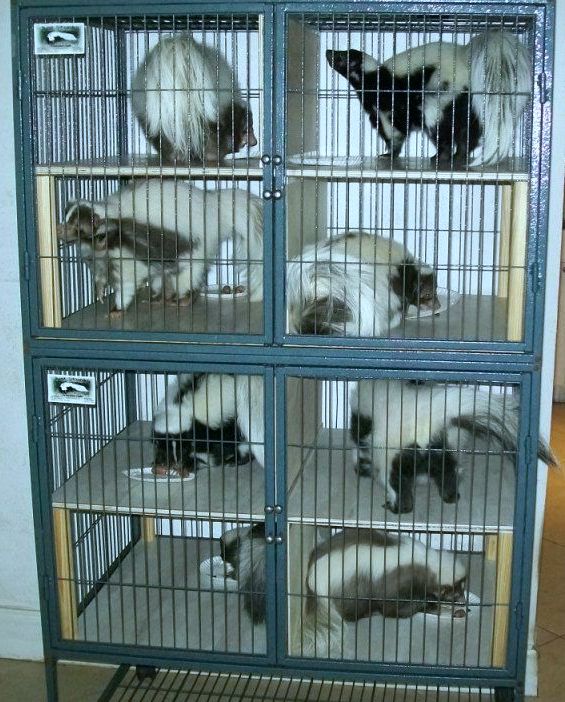
By taking the time to properly introduce the newcomer, many problems can be avoided. Plan on keeping the newcomer separate for a minimum of two weeks until they have been de-wormed and your Veterinarian verifies that the newcomer is healthy. Allow the skunks to meet through a baby gate or other barrier. Watch for signs of aggression like growling or snarling. Huffing, stomping and vocalizing is pretty normal at first. Always feed skunks apart from each. Skunks really enjoy their meals and it is stressful if they are fed together and they are forced to eat fast or not at all. Allow supervised access if the skunks appear to be getting along before allowing them to mingle unsupervised. Always protect the younger skunks from adults and kits from each other if you observe signs of aggression. Older skunks may need to be housed away from rowdy younger ones if you observe they are being bullied. Hopefully this will prevent unnecessary acts of violence that may have a tragic ending.
Leave a Reply
You must be logged in to post a comment.